Maine Coon Behaviour When Lost
Maine Coons are the largest domestic cat breed, and their size and appearance affect how they behave when lost:
- Mistaken for raccoons or bobcats — their large size and bushy tail can cause people to ignore them or be afraid.
- Often "rescued" by finders — their distinctive, beautiful appearance makes people want to take them in.
- May travel further — Maine Coons are athletic and may cover more ground than smaller breeds.
- Hardy survivors — their thick coat and large size make them more cold-resistant than other breeds.
- Friendly but may be wary — Maine Coons are typically sociable, but a lost one may be skittish.
Search Strategy for Lost Maine Coon
- Emphasise "DOMESTIC CAT" on flyers — some people may think your Maine Coon is a wild animal and avoid it.
- Search a wider radius — Maine Coons are athletic and may travel 200-500 metres.
- Check with neighbours — someone may have taken your cat in, thinking it's a stray.
- Use the cat's size as a selling point — on flyers, write "VERY LARGE CAT — 15+ lbs" to help people identify it.
- Check shelters in person — Maine Coons are distinctive and easily identified by shelter staff.
Maine Coon-Specific Search Tips
- Search at dawn and dusk — standard, but especially important for Maine Coons who may be active at these times.
- Check wooded areas — Maine Coons may be drawn to forested areas where they feel at home.
- Set up large humane traps — standard traps may be too small for a large Maine Coon. Ask for a raccoon-sized trap.
- Post in breed-specific groups — Maine Coon Facebook groups and forums. Breed enthusiasts will help share.
Why Maine Coons Are Often Taken In
Maine Coons are one of the most sought-after breeds. A found Maine Coon may be:
- Taken in by someone who wants a free Maine Coon.
- Sold online — sadly, found purebred cats are sometimes sold.
- Brought to a shelter — where it may be quickly adopted.
Speed is critical. Post your alert and flyers immediately.
Prevention for Maine Coon Cats
- Microchip — essential for purebred cats that may be stolen or sold.
- Keep indoors — Maine Coons are valuable and may be targeted.
- Use a collar with ID — and "INDOOR CAT" tag.
- Keep photos current — Maine Coons change appearance as they grow.
Don't Give Up
Maine Coons are hardy and resourceful. Their thick coat protects them in cold weather, and their size deters some predators. Post your lost cat alert now. Read: How to Find a Lost Cat.
1HTML, ], [ 'slug' => 'lost-persian-cat', 'title' => 'Lost Persian Cat? Recovery Guide for Persian Owners', 'category' => 'Breed Guides', 'excerpt' => 'Persian cats are poor survivors outside — their flat faces and long coats make them vulnerable. If your Persian is lost, act immediately.', 'body' => <<<'HTML'Persian Cats Are Vulnerable Outside
Persian cats are one of the most vulnerable breeds when lost. Their physical characteristics make outdoor survival difficult:
- Brachycephalic (flat face) — breathing difficulties, especially in heat or stress. Cannot pant effectively to cool down.
- Long coat — mats quickly outside, collects debris, and can become a health hazard. A Persian's coat deteriorates within days.
- Poor hunters — Persians are bred for companionship, not hunting. They struggle to catch prey.
- Not athletic — Persians can't run fast, climb well, or defend themselves.
- Heat-sensitive — their thick coat and flat face make them prone to heatstroke.
If your Persian is lost, treat it as an emergency. Time is more critical than for other breeds.
Search Strategy for Lost Persian
- Search immediately — don't wait. Persians can't survive long outside in extreme weather.
- Search close to home — Persians are not athletic and won't travel far. Stay within 50 metres.
- Search in cool, shaded areas — under porches, in garages, in basements. Persians seek cool spots.
- Provide water immediately — Persians dehydrate quickly, especially in heat.
- Set up a humane trap — Persians are unlikely to approach people when scared. Trapping is often the best recovery method.
Persian-Specific Risks
- Heatstroke — Persians can't cool themselves effectively. In temperatures above 85°F, a lost Persian is in danger.
- Coat matting — within 3-5 days outside, a Persian's coat will mat severely, causing discomfort and skin issues.
- Eye problems — Persians' prominent eyes are prone to injury and infection outside.
- Predators — Persians can't run or fight. They're easy prey for coyotes, dogs, and aggressive cats.
- Being taken in — their beautiful appearance means finders often keep them.
Flyer Tips for Persians
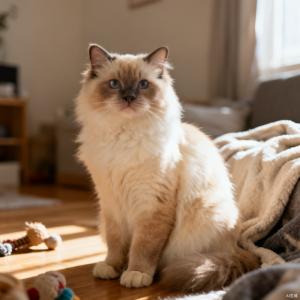
- Write "PERSIAN CAT — flat face, long coat" to help people identify the breed.
- Write "REQUIRES URGENT MEDICAL ATTENTION" to create urgency.
- Include a photo that clearly shows the long coat and flat face.
- Emphasise "INDOOR CAT — cannot survive outside".
Prevention for Persian Cats
- Keep strictly indoors — Persians should never go outside unsupervised.
- Microchip — essential.
- Regular grooming — a well-groomed Persian is more identifiable in photos.
- Keep coat trimmed — a lion cut makes your Persian less likely to overheat if it does escape.
If You Find Your Persian
Take your cat to a vet immediately. Check for:
- Dehydration and heatstroke.
- Coat matting and skin issues.
- Eye injuries or infections.
- Respiratory distress.
- Parasites (fleas, ticks, mites).
Don't Wait — Act Now
Every hour outside is more dangerous for a Persian than for other breeds. Post your lost cat alert now and start searching immediately. Read: How to Find a Lost Cat.